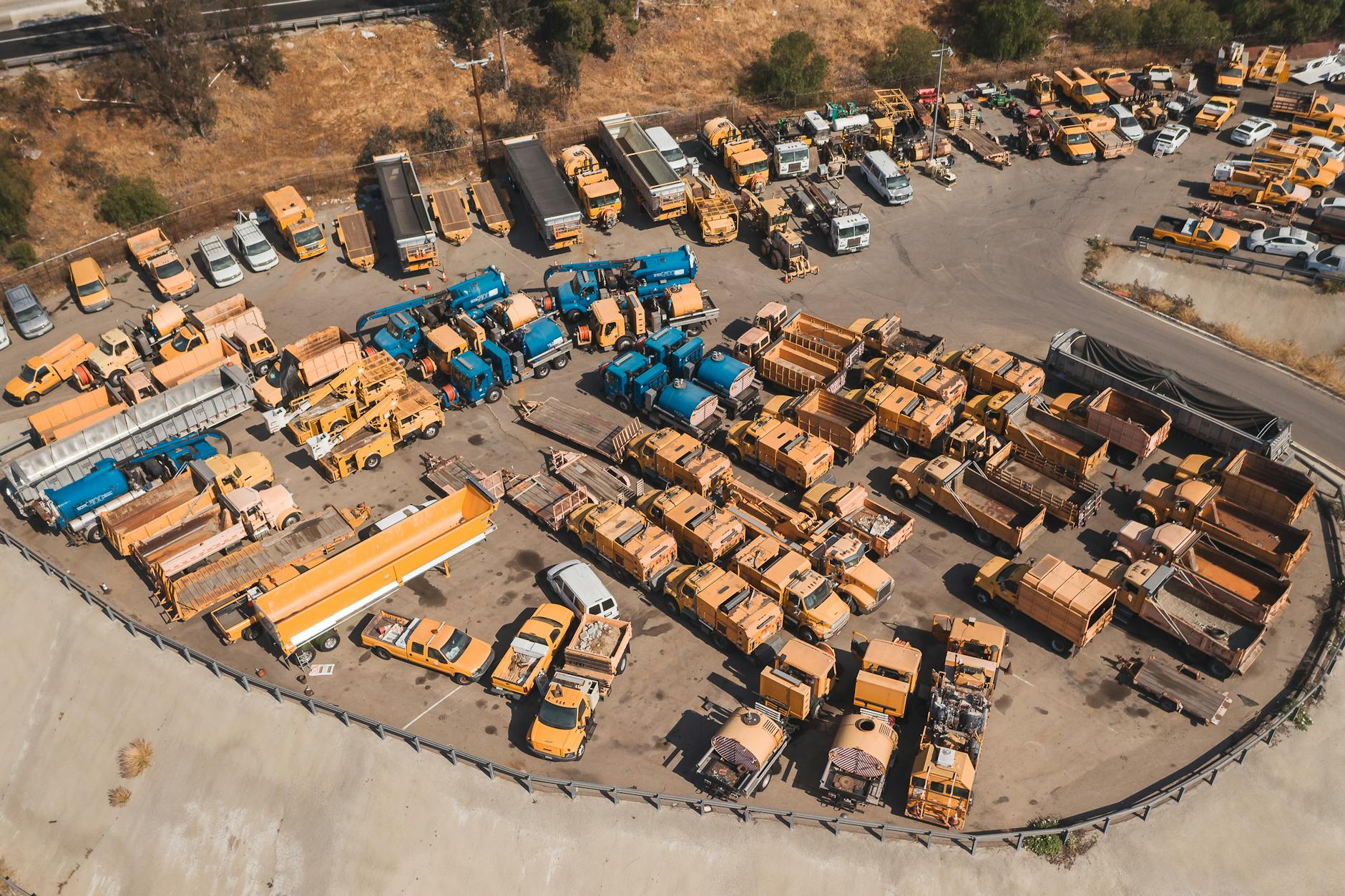
Fleetio is not trying to be every fleet product at once. It is a maintenance-first fleet management platform built around assets, inspections, preventive maintenance, fuel costs, parts, outsourced repairs, and repair history. Its current plan comparison puts maintenance, inspections, reporting, integrations, Fleetio Go, unlimited users, and a growing Tools add-on ahead of native GPS hardware.
That focus matters for contractors because fleet problems usually show up as downtime first: a truck is out, a trailer misses an inspection, a service reminder gets buried, or nobody can explain why one asset costs more to keep on the road than another. Fleetio is strongest when that is the problem you are solving.
The short version: Fleetio is a strong fit if you want cleaner maintenance operations and predictable per-vehicle pricing. It is a weaker fit if you want native GPS, dash cams, ELD compliance, driver safety, theft prevention, and construction equipment utilization inside one bundled platform. For that broader category, start with the best equipment tracking software for contractors roundup before you choose.
Disclosure: Some links on Contractor Software Hub are affiliate links. If you sign up through one, Contractor Software Hub may earn a small commission at no extra cost to you. The recommendation does not change based on that.
Right for / Not for
Right for you if:
- Your fleet pain is preventive maintenance, inspections, work orders, repair coordination, or total cost tracking.
- You want published per-vehicle pricing instead of sales-led quote math.
- You already use, or are willing to use, a separate telematics provider for GPS and meter data.
- You need office staff, field managers, mechanics, and ownership looking at the same fleet records.
- You want a practical step up from spreadsheets without buying a full telematics hardware stack.
Not for you if:
- You need native GPS tracking, dash cams, ELD compliance, or driver safety as the core purchase.
- You want construction-first equipment dispatching, job-site utilization, or project-based asset scheduling.
- You need monthly billing flexibility on the Professional or Premium tiers.
- Your team wants one vendor to provide hardware, software, safety, compliance, and maintenance in one subscription.
Third-party rating context: Capterra lists Fleetio at 4.7 out of 5 from 246 reviews, with Capterra’s page also showing a 98% positive review sentiment. G2 lists Fleetio at 4.6 out of 5 from 209 reviews. Those scores support the same pattern the product pages show: buyers like Fleetio most for maintenance records, inspections, fuel tracking, asset data, and mobile access. They are sentiment context, not a substitute for checking pricing and product claims against Atlas and official vendor pages.
Feature Deep Dive
Preventive maintenance, inspections, and repair history
Fleetio’s core value is maintenance control. The official maintenance page describes automated PM scheduling, inspection results, issue escalation, fault-code and recall handling, service history, repair documents, cost tracking, dashboards, and maintenance shop workflows. That is the right frame for evaluating Fleetio: not a map-first fleet tracker, but a system for keeping service records and maintenance decisions from getting lost.
For contractors, this is the practical layer that often gets ignored until the fleet is expensive. It is less about a flashy map and more about knowing what needs service, what just came out of the shop, what repairs cost, and whether a vehicle should stay in the fleet. If technician scheduling and job dispatching are the higher priority, compare Fleetio against a field-service option from the best field service software guide or the field service mobile app shortlist.
Telematics and GPS through integrations
Fleetio does not include native GPS as the main product. Its official integrations page says Fleetio connects with providers such as Geotab, Samsara, Motive, Verizon Connect, Ford Pro, Caterpillar VisionLink, John Deere Operations Center, and more. Those connections can feed meter, hour, diagnostic, location, and fault data into Fleetio so maintenance schedules and cost reports stay current.
This is both a strength and a trade-off. It is a strength if you already have a telematics provider and want Fleetio to act as the maintenance and cost layer. It is a trade-off if you want one vendor to sell the device, install the hardware, monitor driver safety, record dash-cam events, manage compliance, and run maintenance workflows. In that case, Fleetio may become one part of the stack instead of the stack itself.
Fuel cards, cost data, and accounting exports
The official integrations page also names fuel-card and accounting connections. Fleetio says it supports fuel providers such as WEX, FLEETCOR/Fuelman, Comdata, and Coast, and that it can export or push maintenance costs, purchase orders, work orders, parts usage, and other data into finance workflows. The same page names QuickBooks Online, Sage, Xero, NetSuite, and SAP as accounting or ERP destinations. If QuickBooks connectivity is the broader buying filter, compare the options in the CRM with QuickBooks integration guide.
That matters because fleet data is only useful if finance can trust it. A contractor does not just need to know that a truck had a repair. The useful question is whether that truck is becoming too expensive, whether fuel use is out of line, whether parts spend is rising, and whether the cost center or job number is getting the right expense. Fleetio is credible here because it treats cost reporting as a core maintenance outcome.
Mixed asset, tool, and small equipment support
Fleetio’s pricing page now lists a Tools add-on available across all three plans. The add-on covers issues, custom fields, vehicle linking, assignments, barcodes, QR codes, NFC tags, location tracking, documents and photos, tool service entries, tool reminders, and a sandbox environment (Professional and Premium only). That does not make it a construction equipment operating system, but it does make it more flexible than a vehicle-only maintenance tracker. A contractor with service vans, trailers, small equipment, and shop tools can use one asset record system instead of spreading maintenance notes across clipboards, spreadsheets, inboxes, and basic construction inventory software.
The caveat is workflow depth. Fleetio is strongest when the asset question is: What is it, where is the record, what maintenance is due, what did it cost, and what happened last time? It is not the first tool to shortlist if the main question is: Which job site needs this piece of equipment next Tuesday?
Outsourced maintenance network
Fleetio’s official plan comparison lists outsourced maintenance, a Maintenance Provider Network, and a Maintenance Shop Directory on the higher plans. That matters for contractors without a full internal shop. The value is not just logging a repair after it happens. It is having one place to coordinate, document, and analyze outsourced maintenance instead of letting repair records scatter across email, paper invoices, and vendor portals.
Motor Pool, Fleetio Go, and Premium-tier capabilities
The live pricing page reveals several features that go beyond basic maintenance tracking. Motor Pool is a Premium-only feature for vehicle assignment scheduling, which matters if multiple drivers share a pool of vehicles and you need to track who has what and when. Fleetio Go, the mobile app, is listed across all three plans and gives field staff and mechanics a way to log inspections, service entries, and issues from a phone. Premium also unlocks Sensor Data Snapshots, Data Connectors, SCIM for automated user provisioning, and advanced analytics including custom dashboard reports, custom dashboards, threshold alerts, and data visualizations. These are the features that separate a basic fleet record system from a full fleet operations platform.
What Fleetio Gets Right
Transparent pricing makes budgeting easier
Atlas currently verifies Fleetio’s pricing as published-price SaaS: Essential at $4/vehicle/month billed annually or $5/vehicle/month billed monthly, Professional at $7/vehicle/month billed annually only, and Premium at $10/vehicle/month billed annually only. Fleetio also says rates can vary by plan, fleet size range, contract term, and payment term. The important point for buyers is that the headline pricing is public and per vehicle.
That is a major difference from many fleet and construction-operations platforms. You can model your cost from your vehicle count without booking a demo first. If your owner, bookkeeper, ops manager, dispatcher, and mechanic all need access, confirm the user roles and permission controls in the plan you are evaluating before treating the public vehicle price as the full implementation budget.
The product is honest about what it is
Fleetio’s strongest pages and navigation point toward maintenance, inspections, work orders, fuel, assets, reports, and integrations. That is the right frame. It does not pretend to replace every GPS, safety, compliance, and construction equipment system. That makes the buying decision cleaner: buy Fleetio when maintenance and cost history are the business problem, and do not buy it as a substitute for a full telematics or construction equipment platform.
Integration depth gives it room to fit into an existing stack
Many contractors already have some fleet tools in place. Maybe fuel cards are handled by one provider, GPS by another, and accounting by QuickBooks Online. Fleetio’s official integrations positioning is useful because it does not require a rip-and-replace decision. It can pull data from the tools you already use and make that data useful for maintenance reminders, cost analysis, and reporting. The pricing page also lists Data Connectors as a Professional and Premium feature, which gives larger fleets a way to pipe in external data sources beyond the standard integration catalog.
It is a practical upgrade from spreadsheets
The buyer who gets the most from Fleetio is often not replacing a sophisticated platform. They are replacing spreadsheet logs, paper inspection forms, shared inboxes, and tribal knowledge. Fleetio gives that team a central asset record, maintenance history, inspection trail, and cost view. That is not glamorous, but it is exactly where a lot of fleet waste hides.
Where Fleetio Falls Short
No native GPS tracking
This is the biggest caveat. Fleetio can use GPS and telematics data through integrations, but Fleetio itself is not a native GPS tracking platform. If theft prevention, real-time map views, geofencing, driver behavior, dash cams, or compliance are the reason you are buying, start with a telematics-first vendor and decide whether Fleetio still belongs beside it. Contractors who need GPS time cards and crew tracking as part of a field-service workflow may be better served by a platform like Jobber before adding Fleetio alongside it.
Not construction-first
Fleetio supports construction-relevant assets, but it is not built primarily around construction projects. You do not get a construction ERP workflow, a job-costing-first equipment schedule, or job-site utilization planning as the center of the product. For contractors already running Procore or another project-management backbone, Fleetio may feel like a maintenance record system rather than an operating system.
Annual-only pressure on higher tiers
Essential has both annual and monthly pricing in the Atlas source packet. Professional and Premium are annual-only. That may be fine for an established fleet, but it matters for a smaller contractor that wants to test advanced automations, integrations, parts, or analytics before making a longer commitment. The free trial helps, but it is still not the same as month-to-month flexibility on the higher tiers.
Automation depth is tier-gated
Fleetio’s pricing model makes the entry tier attractive, but not every workflow belongs there. Contractors who need deeper automations, API access, parts inventory, tire tracking, or advanced analytics should expect to evaluate Professional or Premium. The lowest price is real, but it may not be the right plan for a team that needs formal process controls.
Pricing Breakdown
| Tier | Verified price | Key limits from Fleetio pricing page | Best fit |
|---|
| Essential | $4/vehicle/mo annual or $5/vehicle/mo monthly | Monthly billing available; limited maintenance, inspections, and reporting; no work orders, third-party integrations, API, or webhooks; up to 10 vehicle groups; up to 4 custom roles; up to 2.5GB document storage | Small fleets that need a cleaner asset record and basic maintenance discipline |
| Professional | $7/vehicle/mo annual | Annual billing only; up to 5 active automations, limited work orders, 50 API requests/min, 10,000 webhook events/30 days; up to 100 vehicle groups with 4 subgroup levels; up to 50 custom fields; up to 15 custom roles; 25GB document storage; parts inventory (limited) | Fleets that need stronger maintenance workflows, integrations, and process controls |
| Premium | $10/vehicle/mo annual | Annual billing only; up to 40 active automations, full work orders, advanced analytics, 250 API requests/min, unlimited webhook events; unlimited vehicle groups and subgroups; unlimited custom fields; up to 30 custom roles; 250GB document storage; full parts inventory with purchase orders; motor pool; sensor data snapshots; SCIM; data connectors | Teams that need deeper analytics, parts controls, motor pool scheduling, and advanced fleet operations |
What you will actually pay: Start by counting vehicles, then multiply by the verified per-vehicle rate for the tier you need. The cheapest plan is not automatically the best plan. If you need third-party integrations, API access, webhooks, automations, parts inventory, tire tracking, work orders, or advanced analytics, evaluate Professional or Premium before you decide Fleetio is a $4/vehicle/month product for your team. The Tools add-on is available on all plans but priced separately, so factor that in if barcode tracking, NFC tagging, or tool service entries are part of your workflow.
The pricing advantage is visibility. Fleetio’s model is easier to budget than tools that hide everything behind a demo because the public plan table gives you a real per-vehicle starting point. The hidden-cost question is whether you also need a telematics provider, GPS hardware, dash cams, another platform for compliance and safety, or a separate contractor accounting system for the finance side.
What Users Actually Say
Capterra and G2 both show strong review-platform scores for Fleetio. Capterra lists 4.7 out of 5 from 246 reviews, and G2 lists 4.6 out of 5 from 209 reviews. Capterra’s product page describes Fleetio as a platform for remotely managing vehicles, parts, small equipment, tools, maintenance, reminders, fuel, inspections, recalls, and more. G2’s product page describes a similar pattern around maintenance management, recalls, fuel, inspections, parts, vendors, utilization, and mobile access.
Positive themes:
- Capterra’s product page says Fleetio users rate it 4.7 out of 5 for ease of use and 4.7 out of 5 for features.
- G2’s product page says 74% of reviewers gave Fleetio five stars and 22% gave it four stars.
- Capterra’s FAQ summary says Fleetio is most often used by small businesses, with construction appearing as one of the listed industries in the reviewer data.
Critical themes:
- The product is strongest when maintenance is the core problem; teams buying for GPS, dash cams, ELD, or driver-safety hardware still need a telematics-first system.
- Plan selection matters because Essential does not include work orders, API access, webhooks, third-party integrations, or the deeper automation limits buyers may expect.
- Moving clean data into any fleet system takes work, especially if years of maintenance history are scattered across spreadsheets, paper invoices, and inboxes.
Fleetio vs. the Competition
The right comparison depends on the job you are hiring the software to do. Fleetio is strongest when maintenance and asset cost visibility are the center of the problem. Telematics-first products are stronger when location, safety, compliance, and hardware are the center of the problem. Construction-specific tools are stronger when equipment utilization by project is the center of the problem.
| Decision point | Fleetio | Telematics-first platforms | Construction equipment platforms |
|---|
| Primary strength | Maintenance, work orders, inspections, cost history | GPS, dash cams, driver safety, compliance | Equipment location, utilization, project workflows |
| Pricing visibility | Published per-vehicle pricing | Often quote-based or hardware-bundled | Often quote-based |
| Native GPS | No | Yes | Varies |
| Best buyer | Maintenance-focused fleet operator | Safety, compliance, and GPS-heavy operator | Contractor managing equipment across jobs |
| Main risk | Needs another system for location and safety | Maintenance may be secondary | May be too specialized if vehicle maintenance is the core need |
If you are comparing Fleetio to a field-service platform, be careful. Field-service software is usually built around customers, jobs, scheduling, invoices, and technicians. Fleetio is built around assets. A service contractor may need both, but they solve different problems. Use the field service software alternatives guide if the buyer question is more about operations than fleet maintenance, or the ClockShark review if the pain is crew time, GPS time cards, and job-cost notes rather than fleet maintenance records.
Final Verdict
Fleetio is a strong choice for contractors who want to bring discipline to fleet maintenance without buying a full telematics stack. The pricing is clear, the per-vehicle model is easy to understand, the Tools add-on extends tracking to small equipment and shop assets, and the product’s official integrations make sense for teams that already have fuel cards, telematics, accounting, or ERP systems in place.
Fleetio is not the default choice for every contractor with vehicles. If the main problem is GPS, theft prevention, dash cams, driver safety, ELD compliance, or job-site equipment utilization, Fleetio is not the first tool to open. It can still fit into that stack, but it probably should not be the whole stack.
The best Fleetio buyer is the contractor who knows the fleet is costing more than it should, but cannot see exactly why. If you need a maintenance-first system with verified public pricing and a free trial, Fleetio deserves a serious look.
Best for: Small to mid-sized fleets that prioritize maintenance workflows, inspection history, cost tracking, and repair coordination over native GPS tracking.