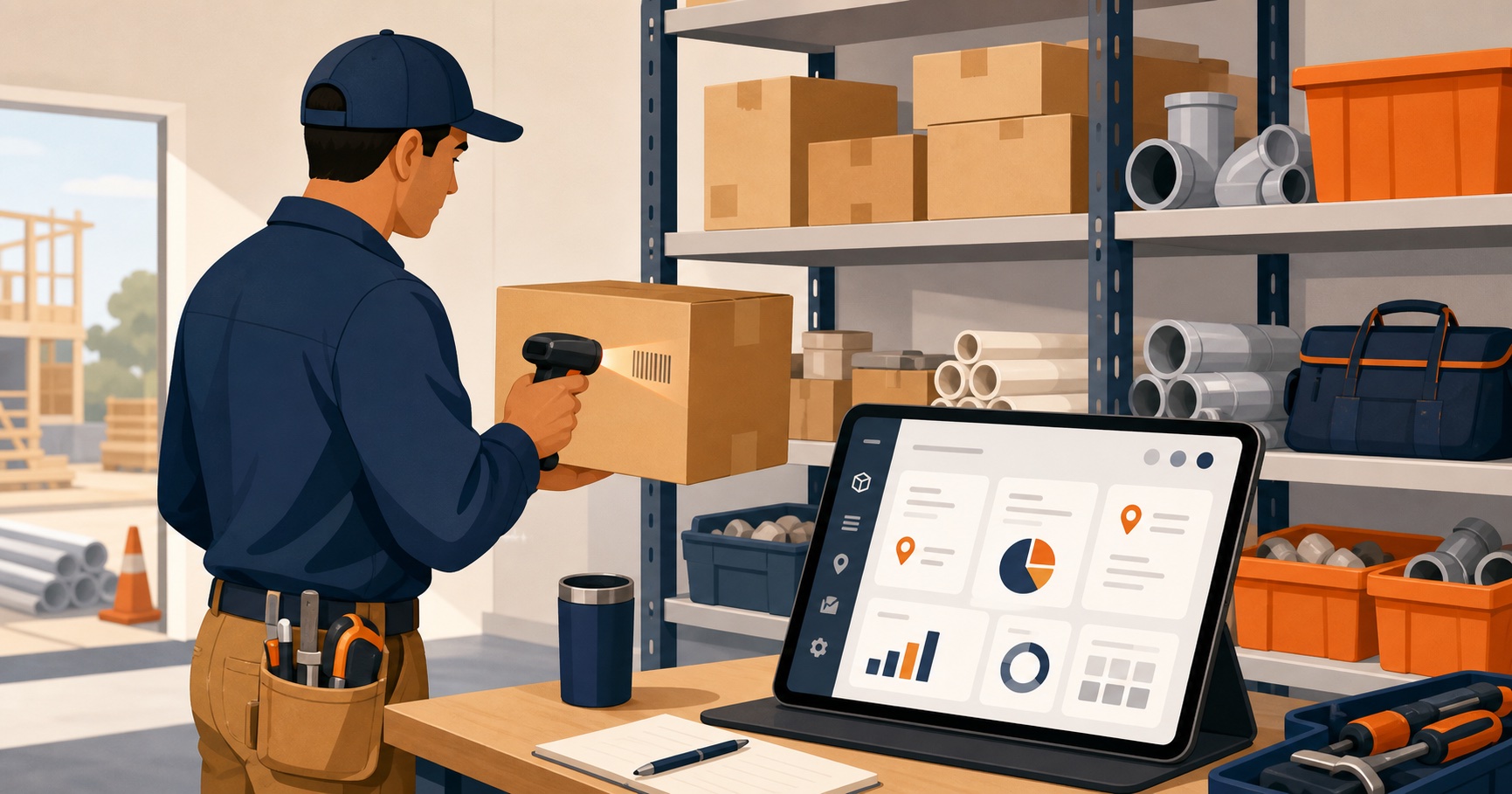
My verdict: Zoho Inventory is a smart pick when a contractor needs real inventory administration at a low price. It can track stock, locations, orders, purchase orders, vendors, serial numbers, batches, barcodes, and shipping workflows. That is a lot of inventory depth for a free plan plus paid plans starting at $29 per organization per month on annual billing.
The catch is fit. Zoho Inventory is not construction management software. It will not manage estimates, job schedules, change orders, daily logs, production tracking, or job costing the way Contractor Foreman, Projul, or Procore can. If that is the buying problem, start with the best contractor software shortlist instead. Zoho Inventory is best when the inventory problem is real and specific: what do we have, where is it, who ordered it, which location owns it, and when do we need to buy more?
Disclosure: Some links on this page are affiliate links. If you sign up through one, I may earn a commission at no extra cost to you. My recommendations do not change based on that. See my full affiliate disclosure for details.
Right for / Not for
Right for you if:
- You have a warehouse, shop, storage room, trailer, truck stock, or job-site staging area that needs a cleaner inventory record.
- The office needs purchase orders, vendor records, sales orders, invoices, packages, shipping, or Zoho Books context tied to stock.
- You can define item names, units, locations, reorder points, and who is responsible for keeping inventory current.
- You already use Zoho Books, Zoho CRM, Zoho Analytics, Zoho Commerce, or another Zoho finance product.
- You want a lower-cost administrative inventory system before committing to a broader construction platform.
Not for you if:
- Your inventory pain is really an estimating, scheduling, job-costing, or field-production problem.
- Field crews need the fastest possible photo-and-QR tool tracker with very little setup.
- You need construction workflows like change orders, daily logs, progress billing, crew dispatch, or project phase tracking in the same system.
- Your accounting process is built around QuickBooks and you need a native, proven workflow before any purchase.
- You do not have anyone internally who will own item setup, location rules, permissions, and stock-count discipline.
Source basis: This review uses Zoho’s official US Inventory pricing, pricing-comparison, features, and product pages, plus Capterra review data. Pricing was live-checked on July 7, 2026. Zoho’s current US page lists Standard, Premium, Plus, and Enterprise paid plans, plus a free plan. Older CSH notes used the prior Professional/Premium naming and a two-location free plan assumption; this review uses the current live page.
Third-party rating: Capterra lists Zoho Inventory at 4.5 out of 5 from 417 reviews. The rating is useful context, but most Capterra reviewers are general small businesses, retailers, ecommerce sellers, and warehouse teams. Contractors should treat the score as proof that the inventory product is mature, not proof that it handles construction operations by itself.
Feature Deep Dive
Inventory items, locations, and stock control
Zoho Inventory gives the office a structured way to define items, organize stock, and track movement. For a contractor, that can mean turning loose material habits into actual locations: main warehouse, shop shelves, service vans, trailers, job-site cages, and returned-material bins.
The location model is the reason Zoho belongs in a construction inventory shortlist. A small contractor can start by naming each real storage area, assigning item units, and setting reorder points. A warehouse manager can then see which stock belongs where instead of relying on memory, whiteboards, or text messages.
The free plan is useful for learning the system, but the limits are tight: 50 orders per month, 1 user, and 1 location. That is enough for a test account or a tiny shop. It is not enough for a contractor trying to manage a warehouse plus trucks plus job-site staging.
Orders, purchase orders, and vendor workflow
Zoho Inventory is stronger than a simple tool tracker because it connects stock to business documents. Sales orders, invoices, purchase orders, bills, vendor credits, vendor payments, backorders, dropshipments, and customer portal features can all live near the inventory record. That matters when the problem is not just “where is the box of fittings?” but “who ordered it, what job needed it, and did the vendor bill us?”
Plan limits matter here. Zoho’s current comparison page lists orders, invoices, purchase orders, and bills per month by tier: 50 on Free, 500 on Standard, 3,000 on Premium, 7,500 on Plus, and 15,000 on Enterprise. Most contractors will not hit those ceilings early, but the limits give you a clean way to pick a tier.
The buyer question is whether those order documents map to your real process. If your purchasing workflow starts from estimates, change orders, and job budgets, Zoho will need rules around how office staff translate job needs into inventory and purchase records. If purchasing is already handled centrally, Zoho fits more naturally.
Serial, batch, barcode, and stock-count features
The advanced inventory controls are real, but they are not all available on the cheapest plan. Zoho’s current pricing comparison places serial number tracking, batch number tracking, picklist, unit-of-measure conversion, barcode generation, stock counting, bin location tracking, replenishment, putaways, and move orders above the free and Standard tier.
That matters for contractors tracking higher-value equipment, serialized parts, warranty-sensitive materials, or inventory that expires. If the real problem is tools moving between trucks and jobs, compare Zoho against dedicated equipment tracking software too. If you need to trace a serial number, track batch movement, or run formal counts, evaluate Premium or higher. Do not judge Zoho by the free plan if the real buying reason is controlled inventory administration.
Barcode scanning and generation are useful when the team can label items consistently. The software can support that workflow, but the operational rule comes first: decide what gets labeled, where labels live, who scans, and when stock changes are recorded. Without that discipline, barcodes become decoration.
Integrations and Zoho finance fit
Zoho Inventory makes the most sense inside the broader Zoho finance suite. The official product page calls out Zoho Books, Zoho CRM, Zoho Analytics, Zoho Commerce, Zoho Payments, Shopify, Amazon, eBay, Etsy, PayPal, Stripe, Xero, Slack, Microsoft 365, Google Workspace, and shipping carriers such as UPS, USPS, DHL, FedEx, Aramex, and Canada Post.
For a contractor already using Zoho Books or Zoho CRM, that is a practical advantage. Customer, order, inventory, and reporting work can live close together. For a contractor using QuickBooks Online as the accounting source of truth, the evaluation is different. Zoho also lists Xero among integrations, but you still need to verify the connector path, what syncs, what does not sync, and whether the bookkeeper is comfortable with the workflow.
Mobile inventory work
Zoho Inventory has iOS and Android apps. A field or warehouse user can check stock, scan items, and work with orders from a phone. That helps with truck stock, job-site receiving, and quick lookups from the storage room.
Still, Zoho is more administrative than visual. If the crew needs to take a photo of a tool, scan a QR code, move it between trucks, and keep the interface extremely simple, a visual inventory app may land better. Zoho is stronger when the office needs the back-end controls around those movements.
What Zoho Inventory Gets Right
The price is easy to model
Zoho publishes the plan prices and core limits. On annual billing, Standard is $29 per organization per month, Premium is $79, Plus is $129, and Enterprise is $249. Monthly billing is $39, $99, $159, and $299 respectively. Local taxes are excluded.
Add-ons are also published. Extra users are $7.50 per month on annual billing or $9 on monthly billing. Extra 500-order blocks are $7.50 annual or $9 monthly. Extra locations are $10 annual or $12 monthly. Advanced autoscans are $8 per 50 scans annual or $10 monthly. Advanced warehousing is $124.17 annual or $149 monthly.
That transparency makes Zoho easier to budget than quote-only platforms. A contractor can model the first year before a sales call: base plan, extra users, extra locations, order volume, and whether advanced warehousing is needed.
It is a real inventory system, not a glorified list
Zoho’s strength is structure. Item groups, composite items, locations, purchase orders, bills, backorders, dropshipments, stock adjustments, reorder points, serial numbers, batch numbers, barcodes, vendor portal, and analytics are the kinds of controls a spreadsheet never handles cleanly.
That is useful for contractors with an actual stockroom. If the company buys material in volume, stores common parts, moves stock between trucks, or tracks vendor purchases centrally, Zoho gives the office a more serious record than a shared sheet.
The upgrade path is gradual
The free plan is not enough for most serious contractor use, but it is a safe way to learn the interface. Standard gives small teams 500 orders per month, 3 users, and 2 locations. Premium expands limits and adds the inventory controls many buyers are really looking for. Plus and Enterprise add higher limits, commerce features, analytics, and larger location capacity.
That makes the first decision less risky. A contractor can test the workflow, then move up when location count, order volume, serial tracking, batch tracking, stock counts, or analytics become necessary.
Capterra sentiment supports the maturity story
Capterra’s 4.5/5 score from 417 reviews is not contractor-specific, but it is a useful signal. The positive themes are consistent: centralized inventory, order tracking, Zoho product connections, and better visibility than spreadsheets. The critical themes are also useful: setup can feel technical, reporting can disappoint, and higher-tier gates matter as the business grows.
That matches my read. Zoho Inventory is mature enough to take seriously, but it still requires process ownership. It is not a magic stockroom. It is a system that works best when someone cares about data quality.
Where Zoho Inventory Falls Short
It does not understand construction jobs by default
Zoho Inventory understands items, orders, locations, vendors, customers, packages, shipments, and invoices. It does not naturally understand crews, phases, estimates, change orders, daily logs, production tracking, retainage, AIA billing, or job-cost reports. Those are construction-management concepts, not inventory-management concepts.
If the business problem is “we keep buying parts we already have,” Zoho can help. If the business problem is “we do not know whether this job is profitable,” Zoho is not enough by itself. You need job-cost software, construction accounting, or a broader operating platform. The small-contractor bookkeeping software guide is a better starting point for that accounting question.
The free plan is mostly a test drive for contractors
The free plan is legitimate, but the limits are narrow. One user and one location mean it cannot represent even a small operation with an office user and a warehouse or truck location. The 50-order monthly cap can also become tight if the account is used for real purchasing and fulfillment workflows.
Use the free plan to learn the interface and test item setup. Budget for Standard or Premium if the test works. Most contractors evaluating Zoho for real inventory control should not pretend the free plan is the long-term answer.
Important features move to higher tiers
Standard is cheap, but it is not the full product. Serial number tracking, batch number tracking, picklists, unit-of-measure conversion, barcode generation, stock counting, vendor portal, and profit margin features are listed on Premium and higher. Plus adds commerce features. Enterprise adds Zoho Analytics and multi-currency transactions for each contact.
That does not make the pricing unfair. It just means buyers should pick the tier based on required controls, not the lowest visible price. If you need serial tracking or stock counts, the relevant starting point is Premium at $79 per organization per month on annual billing.
Reporting may need Zoho Analytics
Zoho includes reports, custom reports, scheduled reports, and Report Builder limits across plans. Enterprise adds Zoho Analytics. For simple stock and order visibility, that may be enough. For contractors trying to answer job-cost questions, margin by project, or materials-by-phase reporting, the reporting model may not map cleanly without extra setup.
This is where Zoho can feel more like a general business tool than a contractor tool. It has the data objects. You still have to decide how those objects connect to jobs, cost codes, and accounting questions.
Pricing Breakdown
| Plan | Annual billing | Monthly billing | Published limits | Contractor read |
|---|
| Free | $0/org/mo | $0/org/mo | 50 orders/mo, 1 user, 1 location | Use for testing or a tiny shop |
| Standard | $29/org/mo | $39/org/mo | 500 orders/mo, 3 users, 2 locations | Good first paid tier for basic office inventory |
| Premium | $79/org/mo | $99/org/mo | 3,000 orders/mo, 5 users, 4 locations, 500 bins/location | First serious tier for serial, batch, barcodes, stock counts, and vendor portal |
| Plus | $129/org/mo | $159/org/mo | 7,500 orders/mo, 10 users, 6 locations, 500 bins/location | For bigger teams or commerce-heavy operations |
| Enterprise | $249/org/mo | $299/org/mo | 15,000 orders/mo, 10 users, 10 locations, 5,000 bins/location | Best when analytics and higher location/bin limits matter |
What you will actually pay: a contractor should budget the plan plus likely add-ons. A Standard account with 4 users and 3 locations on annual billing would be $29 + $7.50 for one extra user + $10 for one extra location, or $46.50 per organization per month before taxes. A Premium account may be more realistic if serial, batch, barcode, stock-count, or vendor-portal features matter.
The tier I would test first: Standard if you only need basic multi-location office inventory. Premium if the reason you are shopping is controlled inventory: serial numbers, batch numbers, barcode generation, stock counting, and vendor portal. The free plan is useful for learning, but it is too small for most real contractor workflows.
Zoho Inventory vs. the Competition
| Fit question | Zoho Inventory | Sortly | Contractor Foreman | Projul |
|---|
| Best for | Administrative inventory, locations, orders, purchasing, and Zoho finance workflow | Visual tool and material tracking | Budget construction management around projects and field records | Annual construction operating platform with job costing and purchase orders on higher tiers |
| Starting price | Free; Standard $29/org/mo annual | Free; paid plans vary by annual/monthly terms | Basic $49/mo annual | Core $4,788/yr |
| Construction workflow | Weak by default | Weak by default | Much stronger | Much stronger |
| Inventory depth | Strong admin controls by tier | Strong visual tracking | Inventory-adjacent construction controls | Materials tied to broader project workflow |
| Best buyer | Office-led inventory and purchasing team | Field-led tool and material tracking team | Budget contractor needing broad PM features | Growing contractor that wants annual platform pricing |
Zoho Inventory vs. Sortly
Sortly is the easier first test when the field crew needs photos, QR codes, mobile updates, and quick item lookup. It feels closer to the way crews identify tools and materials in real life. Zoho Inventory is better when the office needs structured inventory records, purchase orders, vendors, locations, accounting context, and order controls.
Zoho Inventory vs. Contractor Foreman
Contractor Foreman is the better fit when inventory is tied to construction operations. Purchase orders, job records, daily logs, scheduling, time cards, job-costing reports, and QuickBooks Online live closer to the same workflow. Zoho Inventory is better if the inventory function is its own administrative system and the construction work is managed elsewhere.
Zoho Inventory vs. Projul
Projul is much more expensive, but it is solving a broader problem. It connects leads, estimates, schedules, tasks, job costing, QuickBooks, time tracking, change orders, and purchase orders on the right tier. JobTread sits in that broader operating-system lane too. Zoho Inventory is not trying to run that loop. It is the lower-cost inventory system when the company already has another place for project management.
Implementation Plan for Contractor Buyers
Step 1: define locations before importing items
Start with real-world locations: warehouse, shop, office storage, truck 1, truck 2, trailer, job-site cage, and returned materials. Do not import hundreds of items before the location model is clear. Bad locations create bad reports, no matter how clean the item list looks.
Step 2: standardize item names and units
Contractor inventory gets messy because the same item can be called three different things. Decide naming rules, units of measure, categories, and reorder points before launch. Pipe, fittings, wire, fasteners, filters, caulk, paint, and consumables need consistent names if crews and office staff are going to trust the system.
Step 3: pick the workflow that justifies the tier
If the reason for buying is basic stock visibility, Standard may be enough. If the reason is serial tracking, batch tracking, stock counts, barcodes, or vendor portal, test Premium. If the reason is analytics and higher warehouse limits, test Enterprise. Do not pick the cheapest plan and then blame the product for missing features that sit on higher tiers.
Step 4: connect accounting only after the inventory rules work
Accounting integration should come after stock rules are tested. First prove that items, orders, locations, purchase records, and users are working. Then connect Zoho Books, Xero, or another accounting path with a bookkeeper involved. If QuickBooks is required, verify the exact process before making Zoho the inventory source of truth.
Final Verdict
Zoho Inventory is worth testing if your inventory problem is administrative: stock locations, purchase orders, vendor records, serial and batch tracking, barcode workflows, order limits, and finance connections. For that use case, the price is fair, the free plan lowers the risk, and Premium gives small teams a serious inventory control layer without enterprise cost.
It is the wrong tool if the real issue is construction operations. Zoho Inventory will not run estimates, schedules, crews, job costs, change orders, daily logs, or production workflows. If those are the bottleneck, compare Contractor Foreman, Projul, Procore, or the broader construction inventory management software guide.
Best for: contractors that already have some office process around purchasing and stock, and need a low-cost way to make inventory visible across locations.
Pricing verified: Zoho Inventory pricing was checked against Zoho’s official US pricing and plan-comparison pages on July 7, 2026. Prices exclude local taxes and may vary by region or billing term.